
Can You Microwave Paper Plates?
Yes, most paper plates can be used in the microwave. But it’s important to always check the packaging for a microwave-safe label and follow the manufacturer’s directions.
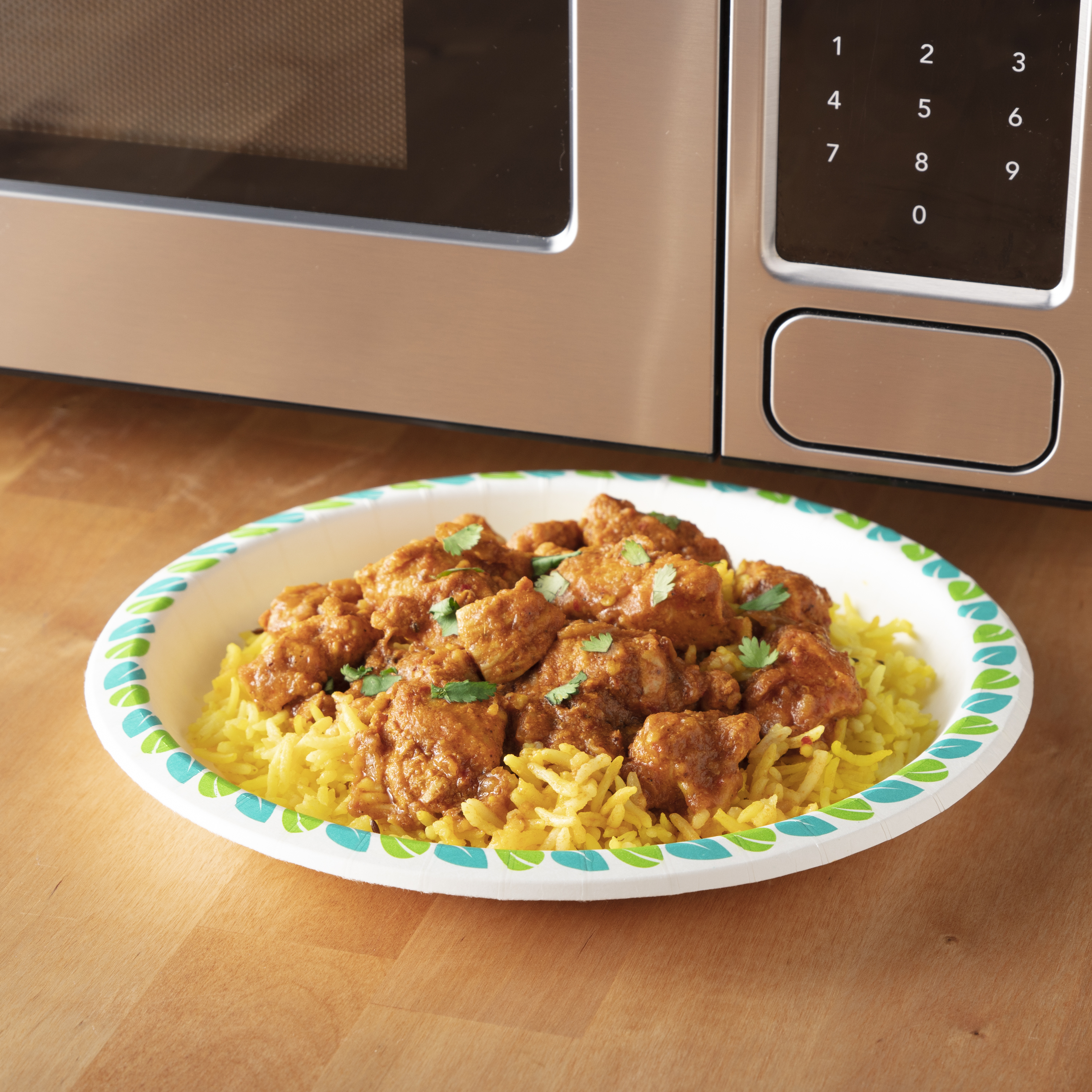
Are Hefty® paper plates microwave-safe?
Yes, Hefty® paper plates can safely be used in the microwave. Both the Hefty® Zoo Pals® Plates and ultra-strong, sustainable Hefty® Compostable* Paper Plates are labeled as microwave-safe and are durable enough that food won’t soak through while heating up.
They are soak-resistant and made with materials that can be used safely in the microwave for reheating food.
However, keep in mind that microwave settings, the type of food, and your personal reheating practices all vary, so you should always use caution and follow manufacturer instructions.
What paper plates are microwave-safe?
Hefty® makes two types of paper plates that can be used in the microwave:
Hefty® Compostable* Paper Plates and Bowls
Compostable paper plates from Hefty® are made from 96% plant-based materials and are microwave-safe. The same material also comes in bowls. The compostable paper plates and bowls are ultra-strong and prevent food from soaking through.
Hefty® Zoo Pals® Plates are microwave-safe for reheating food. These fun, full-color plates feature 10 different animal prints. Each plate includes two built-in sections that can be used for sides or dipping sauces.
Tips for safe microwaving
Using paper plates in the microwave is generally considered safe, but it’s a good idea to consider the following tips:
Always look for a “microwave-safe” label
Check the product label and manufacturer packaging for a “microwave-safe” label every time you buy paper plates. If heating store-bought food, always follow the store’s label instructions for safe preparation.
Keep heating times short
When it comes to the number of seconds or minutes you microwave something, shorter is always better. Microwave foods on paper plates in shorter bursts of time—30-second intervals are a good starting point—and check the temperature to see if it’s ready. Stir in between each interval to ensure even heat distribution.
Use lower power settings
If possible, lower your microwave settings to 50% to 70% power, which can help the food heat more evenly, prevent overcooking, and avoid messes. Review your microwave manufacturer’s instructions for the correct way to adjust power settings.
Watch greasy or saucy foods
While Hefty® paper plates are soak-resistant and made with microwave-safe materials, you should use extra caution when microwaving extremely hot, greasy, or oily foods. They can potentially cause the plate’s coating to degrade or the paper itself to weaken.
Swap for ceramic or glass
When in doubt about whether a paper plate is a good idea, use an alternative microwave-safe dish, like glass or ceramic. They can withstand longer microwave times and may be better suited for larger batches of leftovers. You can still dish out the heated food on paper plates to minimize cleanup.
Avoid plates with metallic paint or foil
The USDA recommends using plain, unprinted, white paper plate designs in the microwave. It’s especially important to avoid metallic paint or foil-infused designs, which can cause sparking or fire hazards if used in the microwave.
Avoid using plastic plates
Plastic plates are typically not microwaveable, as they can melt, warp, or even catch fire when exposed to the high heat of the microwave. Stick to paper when it comes to microwaving!
*Commercially compostable only. Commercial composting facilities may be limited. Check locally to confirm acceptance. If facilities are not available in your area, discard in trash.
